They run the bid-ask spread and profit from the slight differences in the transaction. And these are slightly different from the natural market prices. Brokers also have crypto market making different rules for what they’ll make available to traders and investors. While most brokers allow trading listed stocks, some restrict penny stocks and cryptocurrency.
One of the critical roles that the market makers play is providing liquidity in the market and helping execute large trades. Market makers should not be confused with designated market makers (DMMs). While both market makers and DMMs provide liquidity to the stock market, DMMs have additional responsibilities. DMMs are responsible for maintaining an orderly market by making sure that there is a fair and orderly market for a specific set of stocks. DMMs are also responsible for managing price volatility by temporarily halting trading if necessary. In the cryptocurrency market, the importance of market-making is even more apparent.
They are firms or individuals that provide liquidity to the market by continuously buying and selling securities. In return, they earn profits from the bid-ask spread, the difference between the highest price a buyer is willing to pay and the lowest price a seller is willing to accept. Market makers play a crucial role in maintaining an orderly market and ensuring that buyers and sellers can trade at any time. Market makers earn a profit through the spread between the securities bid and offer price. Because market makers bear the risk of covering a given security, which may drop in price, they are compensated for this risk of holding the assets.
Fidelity, as the broker, will work to obtain the best available price because it can route the order to up to 50 market centers including exchanges, market makers and automated trading systems (ATS). These market centers compete for customer order flow by improving the price. At this point, it probably sounds pretty tempting to set your sights on a market maker position, but remember that it’s not even close to as easy as it sounds.
Market makers monitor the entire market, including stocks, options, and futures on stock indexes, many of which are listed on one or more of several exchange and execution venues. As a result, the difference between the bid and ask is usually a few pennies at most (often less). Market makers may not be the most transparent participants in the trade life cycle—they operate behind the scenes, using high-frequency algorithms and complex arbitrage strategies. They have a clear profit motive, but the result is (mostly) liquid and smooth-running markets. But from the headcount perspective, the biggest market makers are SIG (Susquehanna International Group), Oliver, Jane Street, Citadel Securities, DRW, IG Markets, and IMC. At the end of the day, traders are making great gains with the market we have today.
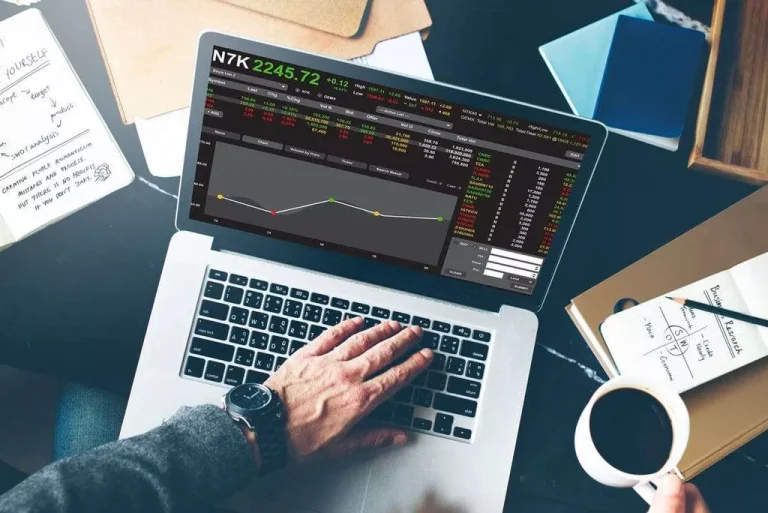
Total market capitalization of domestic companies listed in the United States.
This article delved into the concepts, theories, and practical applications of market making. It is an essential part of the operation of the financial market, ensuring liquidity and efficiency and allowing investors to transact at any time. No, market makers can be banks, but they can also be other types of financial institutions or even individuals. However, high levels of market maker activity can also lead to increased volatility in securities prices.
SuperMoney strives to provide a wide array of offers for our users, but our offers do not represent all financial services companies or products. In fact, a market maker is often called a “liquidity provider,” as their job is to facilitate the flow of the market. Doug is a Chartered Alternative Investment Analyst who spent more than 20 years as a derivatives market maker and asset manager before “reincarnating” as a financial media professional a decade ago. Let’s imagine how trading might go for a market maker in Apple (AAPL) stock on the day of one of its product events. In the morning, there’s a lot of buzz around what new things Apple might unveil. A principal trade is when a brokerage firm fills a customer’s trade with its own inventory.
They help create liquidity, availability, and volume in the market and make it run efficiently and seamlessly. With market making strategy, the market makers perform from both the sides i.e., by buying and selling in the markets. This way they not only create the market, but also earn profit by selling at a slightly higher price than the market price. Generally speaking, market makers help exchanges by maintaining the efficiency of their operations in the markets.

If MM is short Alpha, the average price should be above the current market price, so that the net short position can be closed out at a profit by buying back Alpha shares at a cheaper price. The market-maker spread can be considered a measure of the liquidity (i.e. the supply and demand) of a particular asset. As market makers are more willing to bid or offer, there are larger sizes on the spread, and larger volumes can transact without moving the market too much. Market-maker spreads tend to be tighter in more actively traded names, and in those that have more market makers available to make markets. MMs earn a living by having market participants buy at their offer and sell to their bid over and over again, day in and day out. Without market makers, there’s no telling how stock trading volumes and prices would change – to put it simply, the way that the stock market operates isn’t imaginable without market makers.
Conagra beats profit estimate as higher prices offset soft demand – Reuters
Conagra beats profit estimate as higher prices offset soft demand.
Posted: Thu, 05 Oct 2023 20:38:00 GMT [source]
On the London Stock Exchange there are official market makers for many securities. Some of the LSE’s member firms take on the obligation of always making a two-way price in each of the stocks in which they make markets. Their prices are the ones displayed on the Stock Exchange Automated Quotation (SEAQ) system and it is they who generally deal with brokers buying or selling stock on behalf of clients. Throughout the day, market makers will be both buying and selling the same underlying security countless times.
While there are some apparent downsides to being a market maker and dealing with a market maker, the pros certainly outweigh the cons. A market maker usually is registered in an exchange such as the NASDAQ or the NYSE. They form an integral part of the financial ecosystem because they bring structure and order to the trading activity. You might wonder how a market maker is different from other roles on the trading roles. Yet despite their importance, there is a lot of negativity and doubt that surrounds the word of market making. This report from the Economist details how at times even market makers can be cautious when the market churns.
- They work through a system run by the National Association of Securities Dealers or NASD and this has been in place since 1971 since the NASDAQ started its operations.
- As this process increases the liquidity in the market, it is known as market making.
- With the help of market makers, the financial system functions smoothly and investors can trade with confidence.
- He has spent the decade living in Latin America, doing the boots-on-the ground research for investors interested in markets such as Mexico, Colombia, and Chile.
- The prices they quote are influenced by market conditions, supply and demand, and other factors.
When an investor wants to buy shares, the DMM will sell them at the ask price. These specialized traders also have access to valuable information such as order imbalances, which allows them to make informed decisions on how much inventory they should hold. Without them, it would be difficult for investors to buy or sell securities quickly and efficiently.